
Market Entry Strategies in Brazil: How Will the New Tax Framework Impact Your Decision?
Market Entry Models in Brazil After the Tax Reform: What Foreign Companies Need to Know Entering the Brazilian market has always demanded strategic foresight. As one of the world’s largest economies, with a rapidly expanding consumer base and strong sectors such as agribusiness, energy, healthcare, and technology, Brazil continues to attract international investors. However, the complexity of its former regime, characterized by overlapping levies and varying regulations across states and municipalities, historically made selecting the optimal market entry structure a significant challenge. The Tax Reform enacted in 2023—currently being phased in through 2033—marks the most significant overhaul of Brazil’s fiscal landscape in decades. While the reform leaves existing market entry structures intact, it fundamentally redefines the strategic criteria foreign companies must evaluate when determining the most suitable approach for expansion. What Are the Entry Models in Brazil? Before assessing the implications of the Tax Reform, it is essential to outline the primary market entry structures available for foreign companies seeking to establish operations in Brazil. Subsidiary The subsidiary remains the most prevalent market entry model. Structured as a Brazilian legal entity, wholly owned by the foreign parent company, it possesses its own legal personality. This model provides greater autonomy for strategic decision-making, streamlines compliance with domestic regulations, and facilitates access to local capital markets. Branch office A branch office functions as a direct extension of the foreign parent company and lacks a separate legal personality. While this structure can simplify governance, it also exposes the parent company to legal and financial liabilities in Brazil, which makes it more suitable for lower-risk or limited-scope operations. Joint ventures Joint ventures involve strategic partnerships with local companies and are particularly appealing in highly regulated sectors such as energy, infrastructure, and healthcare. This model enables risk-sharing, leverages local market expertise, and facilitates compliance with sector-specific regulatory requirements. Distributors and commercial representatives Market entry through distributors or commercial representatives is a frequent first step for testing the Brazilian market. While this approach entails lower operational and financial exposure, it also limits the foreign company’s control over brand positioning and customer experience. All of these entry structures remain available. However, under the new tax system, their assessment is increasingly shaped by strategic business considerations rather than intricate tax optimization. Factors such as logistics efficiency, market accessibility, and the availability of qualified talent have become central to determining the most suitable path for expansion. What Changes with the Tax Reform? The former system, based on five different levies (IPI, PIS, Cofins, ICMS, and ISS), is being replaced by two value-added taxes and a selective tax: CBS (Contribution on Goods and Services), under federal jurisdiction. IBS (Tax on Goods and Services), jointly administered by states and municipalities. Selective Tax (IS), applied to goods and services harmful to health or the environment. This reform eliminates cascading taxation, broadens the application of tax credits throughout the supply chain, and mitigates structural distortions such as the long-standing “fiscal war” between states. It also aligns Brazil more closely with OECD practices, as the adoption of a dual VAT model reflects widely accepted international standards. A critical consideration is the transitional period extending to 2033. During this phase, the former levies will gradually coexist with the new tax framework, which requires careful planning to avoid distortions in contracts, supply chains, and cash flow. According to KPMG, specific industries face particular challenges: exporters will face new border taxation rules, retailers must recalculate margins under a single IBS rate (estimated between 25% and 30%), and technology and digital services companies will need to adapt to interstate taxation of digital services. Impact on Entry Models Subsidiaries The appeal of establishing subsidiaries is significantly augmented. The implementation of destination-based taxation and the full crediting of input taxes reduce regional disparities and create greater financial predictability. This allows companies to choose locations based on robust infrastructure, consumer proximity, and innovation hubs, rather than tax incentives. Branches For branches, the streamlined tax system is anticipated to yield a reduction in administrative overhead and a decrease in legal disputes, which have historically been significant under the previous fragmented fiscal regime. While the parent company still bears direct liability, the improved legal certainty mitigates part of the risk. Joint ventures Joint ventures will now undergo a more strategic evaluation. Historically, many were structured to benefit from local tax incentives. As tax harmonization eliminates those distortions, the focus shifts to the partner’s ability to add market knowledge, regulatory expertise, and complementary resources. Distributors and representatives Distributor or representative models, frequently chosen as an initial step, also benefit from diminished compliance complexities under the new tax framework. This makes market entry less costly. However, given the limited control over operations and branding, companies must carefully assess when to transition to a more robust structure, such as a subsidiary. Operational challenges There are also operational challenges to consider. For instance, the availability of tax credits will be contingent upon the preceding stage of the supply chain remitting its tax obligations, a factor that could impact liquidity and critical financial metrics such as EBITDA. For companies in retail, logistics, and digital services, this will require robust ERP integration and near real-time reporting capabilities to ensure compliance, which could also affect working capital management. Foreign companies must therefore adjust accounting systems and invest in digital compliance infrastructure to meet the new demands of the regime. Investor Confidence Is Rising Even during its transition phase, the Tax Reform has demonstrably enhanced perceptions of Brazil as an attractive investment destination. In 2024, Foreign Direct Investment (FDI) reached US$ 71.1 billion, a 13.8% increase compared to 2023, according to Brazil’s Central Bank. The OECD ranked Brazil as the second-largest recipient of FDI worldwide, behind only the United States. Additionally, at the 7th Brazil Investment Forum (BIF 2024), over BRL 54 billion in new projects were announced, confirming investor confidence in the changing regulatory and tax landscape. These figures demonstrate that, while there will be adaptation costs, the long-term forecast is of a more stable, predictable, and competitive market.
Brazil’s New Reciprocity Law
Brazil’s New Reciprocity Law: What Global Investors Need to Know In April 2025, Brazil approved and enacted the Economic Reciprocity Law, granting the federal government legal authority to adopt trade measures equivalent to those imposed by other countries on Brazilian exports. In July, a presidential decree officially regulated its implementation, establishing formal procedures for the adoption of countermeasures. This legislation signals a notable shift in Brazil’s institutional posture toward global trade. For international investors, especially US-based firms, this new legal landscape calls for a more sophisticated approach to risk assessment, market entry strategy, and regulatory positioning. A New Layer in Brazil’s Regulatory Landscape The Reciprocity Law does not disrupt the foundations of Brazil’s investment climate, which remains supported by a predictable legal framework and stable institutions. What it does introduce is a new dimension in the regulatory risk matrix: trade geopolitics. Companies with ties to the United States must now evaluate not only domestic economic and regulatory factors, but also the potential consequences of bilateral political decisions. Risk assessments that once focused solely on tax exposure, licensing, and sectoral regulation must now account for scenarios involving retaliatory tariffs, import restrictions, and administrative measures. Importantly, the law’s impact will be shaped not just by the countermeasures themselves, but by how they are framed, communicated, and perceived. Sectors That Require Closer Risk Mapping Sectors warrant closer attention include: Technology and electronics Medical devices and pharmaceuticals Aerospace and defense Agribusiness with imported inputs Automotive and industrial machinery Establishing a local presence, forming partnerships with Brazilian entities, and adopting flexible corporate structures can mitigate exposure while unlocking opportunities linked to government incentives and institutional access. Structuring for Resilience In volatile geopolitical contexts, the choice of market entry model becomes a strategic differentiator. Structures based solely on exports are increasingly vulnerable to trade disruptions, while local operational models offer greater insulation and market agility. Joint ventures with Brazilian partners, enhancing institutional legitimacy Local production or assembly, reducing exposure to tariffs and easing access to public tenders Acquisition of local assets, facilitating faster regulatory adaptation and integration into the Brazilian ecosystem These models do more than reduce risk—they enable competitive advantage, particularly in sectors with regulatory sensitivity or government oversight. Compliance, Governance, and Operational Predictability Operating safely in Brazil requires a proactive, integrated compliance framework. Foreign companies should implement governance practices that align with both local and international standards, including: Rigorous due diligence on local partners and suppliers Anti-corruption policies aligned with both Brazilian law and the US Foreign Corrupt Practices Act (FCPA) Internal whistleblower systems and ongoing training Continuous monitoring of tax, labor, and regulatory obligations Regular audits focused on sector-specific risks and compliance gaps These structures not only minimize legal and reputational risks—they demonstrate institutional maturity, which is increasingly relevant in Brazil’s high-compliance sectors. ILM Group: Strategic Advisory for a Changing Landscape In this evolving environment, local partnership is no longer a convenience—it is a necessity. ILM Group supports global companies by integrating strategic guidance, legal structuring, and institutional representation. Ongoing regulatory and policy monitoring Corporate structuring designed for governance, agility, and control Fiduciary representation, enabling secure and timely decision-making Stakeholder engagement and institutional relationship management We serve as a bridge between Brazil’s complex institutional framework and the strategic goals of global companies seeking secure and sustainable growth in the country. Brazil Remains a Strategic Destination—For Prepared Investors The Reciprocity Law should not be seen as a deterrent, but as a signal that doing business in Brazil requires greater awareness, deeper preparation, and smarter structuring. The fundamentals remain unchanged: Brazil is Latin America’s largest economy, with strong demand across healthcare, infrastructure, clean energy, technology, and agribusiness. With the right approach, Brazil remains a high-potential, resilient, and profitable destination for long-term global investors. For more information, contact us here.
Navigating the Tides of Change: Brazil’s Economic Transformation and the Emerging Role of Foreign Tech Investmen
Navigating the Tides of Change: Brazil’s Economic Transformation and the Emerging Role of Foreign Tech Investment Navigating the Tides of Change: Brazil’s Economic Transformation and the Emerging Role of Foreign Tech Investment A Decade of Gradual Evolution (2015–2025) Between 2015 and 2025, Brazil has undergone a steady economic and regulatory evolution. Shaped by global macroeconomic changes, political reform, and a growing focus on digital infrastructure, the country is gradually diversifying its economy—and this shift is beginning to be reflected in the profile of international companies entering the market. After periods of volatility, the nation’s economic growth—according to the World Bank—averaged above 3% between 2022 and 2024, driven by robust domestic consumption, resilient services and agricultural sectors, and a recovering labor market. Despite structural challenges such as inflation, budget rigidity, and a weakened currency (the Real), many government reforms and the private sector momentum are creating new opportunities—especially for businesses attuned to local dynamics. ILM Group’s Perspective: A Gradual Change in Foreign Investment Profiles At ILM Group, a consulting and Business Process Outsourcing (BPO) firm specialized in guiding international companies into Brazil, this shift has been observed firsthand over the past ten years. While traditional industries—such as industrial manufacturing, energy, and logistics—continue to play a key role, there is a noticeable and increasing interest from players in the tech, fintech, agrotech, and digital infrastructure sectors. “It is not a complete transformation, but a gradual diversification,” says Fabian Peters, CEO of ILM Group. “We still serve many traditional companies, but we’ve seen a growing number of clients from more agile, tech-driven sectors in recent years.” This evolution is echoed in broader market trends. The agricultural sector, for example, remains vital to Brazil’s economy but is increasingly embracing modernization. The adoption of IoT sensors, AI-driven analytics, and precision farming techniques—highlighted by the World Bank and Equinix—is improving efficiency and yields while reducing waste. Meanwhile, Brazil’s technology sector, particularly in areas like cloud services, cybersecurity, and digital payments, has expanded significantly, supported by targeted public investment and a highly connected population. Digital Economy and Infrastructure: New Growth Anchors Brazil’s digital economy is becoming increasingly relevant. Government initiatives such as the E-Digital Strategy and the National AI Plan have provided frameworks for growth, backed by over USD 4 billion in investment in digital infrastructure and applied innovation. São Paulo has solidified its role as a national tech hub, and emerging projects like Rio AI City—which seeks to transform Rio de Janeiro into a major regional data center hub—illustrate how digital infrastructure and renewable energy are becoming increasingly intertwined. “Some of our newer clients are drawn to Brazil by the scale of the consumer market and the maturing digital infrastructure,” Peters notes. “What used to be barriers—like regulation and red tape—are becoming manageable with the right preparation.” Agtech and Sustainability: Early Signs of a Broader Shift Brazil’s agriculture sector remains a pillar of its economy, contributing significantly to GDP and exports. Yet it is also modernizing. According to the “Radar AgTech Brasil 2024”, the number of agtech startups has grown by 75% since 2019, supported by innovations in precision agriculture, biotechnology, and climate-resilient practices. ILM Group has seen a gradual but rising number of international investors exploring opportunities in sustainable agriculture, bioeconomy, and green infrastructure, particularly in connection with ESG-driven objectives. Structural Reforms: Improving the Business Environment Recent government reforms—such as the ongoing indirect tax overhaul and regulatory updates in digital finance and stablecoins—signal Brazil’s intention to improve its business climate and attract long-term investors. Still, challenges remain: public debt is projected to reach 79.6% of GDP by 2028, and spending rigidity continues to limit policy flexibility. For international companies, this creates both risks and opportunities. To improve the odds of success, a local partner is advisable. ILM Group helps clients navigate these regulatory shifts, offering a structured approach to market entry that integrates advisory, paralegal, accounting, and fiduciary services. “We focus on helping our clients anticipate change,” says Peters. “Brazil is becoming more and more attractive, perhaps accelerated by macroeconomic developments in other markets like the US and China, but success still depends on getting the structure right from day one.” A Region of Cautious Optimism While Brazil stands out as a leader in Latin America’s digital transition, the broader region remains challenged by low investment rates, skills gaps, and uneven digital infrastructure. Still, rising digital demand and regional integration efforts—such as the EU–Mercosur agreement—could unlock new momentum. About ILM Group Founded in 2015, ILM Group provides international companies with the full suite of back-office services required for strategic entry into Brazil. With offices in São Paulo and three other regions, the firm supports more than 100 clients from around the world, offering services that range from legal representation and tax planning to EOR and market intelligence. “Our mission is not just to simplify expansion,” Peters concludes. “It is to act as a partner of trust and make sure companies expand intelligently, legally, efficiently and sustainably.” For more information, visit ILM Group.
New Regulations for Crypto Assets in Brazil: Opportunities and Challenges with Central Bank Oversight
New Regulations for Crypto Assets in Brazil New Regulations for Crypto Assets in Brazil: Opportunities and Challenges with Central Bank Oversight The Brazilian crypto asset market is on the brink of a significant transformation. The Central Bank of Brazil (BCB) has announced three public consultations (CP 109, 110, and 111) that will define the regulatory framework for Virtual Asset Service Providers (VASPs). While these changes may present challenges for VASPs that must comply with the new regulations, they aim to enhance security, increase transparency, and create new opportunities for companies in the sector. Context of the Public Consultations The public consultations initiated by the Central Bank aim to establish the regulatory framework for the formation, operation, and authorization of VASPs in Brazil. CPs 109 and 110, announced in November 2024, outline access and organizational requirements for these entities, including minimum capital thresholds, corporate governance standards, and asset segregation policies. Meanwhile, CP 111 proposes to regulate VASPs’ operations in the foreign exchange market, enabling international transactions to be conducted directly with virtual assets, thereby removing the need for conversion into fiat currency. Key Changes and Impacts One of the most significant proposed changes is enabling international payments exclusively with virtual assets, without the need for conversion into traditional currencies. This reform could enhance cross-border transactions by lowering costs and improving efficiency for businesses. However, strict security measures have been established: VASPs will be barred from transferring assets to self-custody wallets owned by non-residents and must implement procedures to verify the origin of transmitted assets. Self-custody wallets are those that grant users full control over their digital assets without intermediaries. While they provide greater autonomy, they also pose significant risks, as users bear sole responsibility for their private keys. Since they are difficult to monitor and trace, these wallets are considered potential conduits for illicit activities, including money laundering and terrorism financing. As a result, the new regulation bans the transfer of assets to self-custody wallets owned by non-residents in Brazil. Opportunities in the Brazilian Market Despite the stringent regulatory requirements, the new framework creates opportunities for companies entering Brazil’s virtual asset market. Commercial banks, investment banks, and brokerage firms may apply for VASP licenses, broadening their service offerings and attracting new clients. In this context, firms with extensive expertise in Brazil’s regulatory landscape will be well-placed to support businesses adapting to the new framework. Securing Central Bank authorization and establishing robust compliance frameworks will be critical for regulatory compliance. Next Steps The coming months will be decisive for crypto asset market participants. Companies should closely monitor regulatory developments, prepare for and anticipate major adjustments. This period will be critical for refining internal processes, ensuring compliance, and implementing the necessary measures required by the Central Bank. Conclusion The new VASP regulations mark a new chapter for Brazil’s crypto asset market. While it presents significant challenges for businesses adapting to a stricter regulatory environment, it also creates opportunities for new ventures and innovations in the financial sector. Success in this evolving landscape will depend on adaptability and strategic partnerships to navigate the regulatory complexities. ILM Group is ready to help your company turn these challenges into opportunities by offering comprehensive solutions for market entry, compliance, and expansion in Brazil’s virtual asset sector. For more information, click here.
Accord Mercosur-Union européenne
Accord Mercosur-Union européenne : opportunités et défis pour les entreprises internationales Après plus de deux décennies de négociations, l’accord de libre-échange entre le Mercosur et l’Union européenne (UE), finalement conclu en décembre 2024, marque un jalon historique dans le commerce international. Ce pacte, qui supprime les droits de douane sur environ 90 % des marchandises échangées entre les blocs, crée l’une des plus grandes zones de libre-échange au monde et promet de transformer les relations économiques entre les deux régions. Le jalon de la finalisation des négociations Le 6 décembre 2024, le président de la Commission européenne et ceux des pays du Mercosur (Brésil, Argentine, Paraguay et Uruguay) ont officiellement conclu les négociations sur l’accord, surmontant des obstacles politiques et techniques qui avaient retardé sa mise en œuvre depuis l’entente préliminaire annoncée en 2019. Décrit par la Commission européenne comme un « partenariat révolutionnaire », cet accord, s’il est mis en œuvre, offrira de nouvelles opportunités pour les entreprises internationales, notamment dans les secteurs industriels et agricoles. La finalisation des négociations était une étape cruciale, mais l’accord doit encore être ratifié par les pays participants. La prochaine étape consiste en un examen juridique du texte et en sa traduction dans les langues des États contractants. Impacts et avantages pour les entreprises 1. Accès élargi au marché et réduction des droits de douane: L’accord prévoit l’élimination progressive des droits de douane sur 91 % des marchandises exportées de l’UE vers le Mercosur et 92 % des marchandises du Mercosur entrant dans l’UE. Pour les entreprises européennes, cela se traduit par des réductions de coûts significatives dans des secteurs tels que l’automobile, la pharmacie et la technologie. En revanche, les exportateurs du Mercosur gagneront en compétitivité sur le marché européen, grâce à l’entrée de produits comme le bœuf, la volaille, le soja et le sucre avec des droits de douane réduits. 2. Simplification et compétitivité: Au-delà des droits de douane, le pacte favorise l’harmonisation réglementaire et simplifie les procédures douanières, réduisant les barrières non tarifaires. Les entreprises du Mercosur bénéficieront d’exportations simplifiées et de coûts administratifs moindres, tandis que les entreprises européennes trouveront de meilleures conditions pour concurrencer sur les marchés sud-américains. 3. Protection de la propriété intellectuelle: L’accord prévoit également un renforcement de la protection des indications géographiques (IG), au profit de produits européens emblématiques tels que les fromages et les vins, qui seront protégés contre les imitations dans les pays du Mercosur. 4. Engagements en matière de durabilité: L’un des piliers de cet accord est son engagement en faveur du développement durable. Il inclut des dispositions contraignantes pour lutter contre la déforestation, notamment en Amazonie, et s’aligne sur l’Accord de Paris, avec des objectifs concrets de réduction des émissions de gaz à effet de serre. Cet accent mis sur la durabilité favorise un environnement commercial plus responsable, en phase avec les valeurs mondiales. Implications pour le secteur agricole Pour les pays du Mercosur, l’accord ouvre les portes du marché européen, profitant particulièrement aux exportateurs agricoles. Des produits comme le bœuf, la volaille, le soja et le sucre bénéficieront de droits de douane réduits ou supprimés, renforçant ainsi leur compétitivité. En revanche, les agriculteurs européens expriment des inquiétudes quant à l’arrivée de ces produits, craignant une concurrence déloyale en raison de différences de coûts de production et de normes réglementaires. Défis persistants Malgré l’optimisme, la mise en œuvre de l’accord se heurte à des résistances. La ratification nécessite l’approbation d’au moins 15 des 27 États membres de l’UE, représentant 65 % de la population du bloc. Des pays comme la France, la Pologne, l’Italie, l’Autriche et les Pays-Bas ont exprimé des préoccupations, principalement liées à l’impact sur le secteur agricole et aux questions environnementales. De plus, les engagements en matière de durabilité exigent un suivi actif et la participation de toutes les parties prenantes. Se préparer au nouveau paysage commercial Avec la conclusion des négociations, les entreprises des deux blocs doivent se préparer aux transformations que l’accord, s’il est ratifié, pourrait engendrer. L’harmonisation réglementaire et l’élimination des droits de douane créeront de nouvelles dynamiques, nécessitant des ajustements des stratégies commerciales et des investissements dans la durabilité. Les entreprises qui souhaitent naviguer avec succès dans ce contexte peuvent compter sur le soutien d’ILM Group. Grâce à une approche centrée sur le client et à une connaissance approfondie du marché brésilien et de la région du Mercosur, ILM Group propose des solutions sur mesure pour aider les entreprises à prospérer dans ce nouvel environnement économique. Services offerts par ILM Group : – Services administratifs et financiers : Des solutions complètes couvrant tous les services administratifs et comptables essentiels pour libérer le potentiel du marché brésilien et favoriser la réussite commerciale. – Développement commercial : Assistance dans l’identification d’opportunités d’affaires et fourniture d’informations stratégiques pour l’expansion sur le marché brésilien. – Services fiduciaires et d’audit : Garantie de conformité juridique et financière, répondant aux normes réglementaires locales et internationales. – Recrutement et dotation en personnel : Soutien dans l’embauche de professionnels qualifiés adaptés aux besoins spécifiques de chaque entreprise. – Expansion dans le Mercosur et en Amérique latine : Facilitation de l’accès au marché et des opérations dans d’autres pays du Mercosur et d’Amérique latine, en s’appuyant sur une expertise régionale. Contactez ILM Group pour découvrir comment nous pouvons aider votre entreprise à s’adapter et à se développer dans cet environnement commercial en évolution. Pour plus d’informations, cliquez ici .
Mercosur-European Union Agreement: Opportunities and Challenges for International Businesses
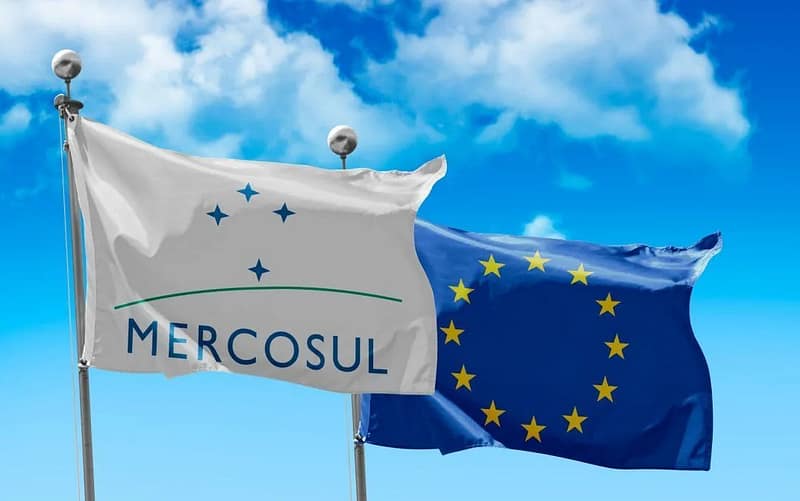
Mercosur-European Union Agreement: Opportunities and Challenges for International Businesses After more than two decades of negotiations, the free trade agreement between Mercosur and the European Union (EU), finally concluded in December 2024, represents a historic milestone in international trade. This pact, which eliminates tariffs on approximately 90% of goods traded between the blocs, establishes one of the largest free trade areas in the world and promises to transform economic relations between the two regions. The Milestone of Finalizing Negotiations On 6 December 2024, the president of the EU Commission and those of the Mercosur countries (Brazil, Argentina, Paraguay, and Uruguay) formally concluded the negotiations on the agreement, overcoming political and technical barriers that had delayed progress on its implementation since the preliminary understanding announced in 2019. Described by the European Commission as a “revolutionary partnership,” this agreement, if implemented, will bring new opportunities for international businesses, particularly in industrial and agricultural sectors. Finalizing the negotiations was a crucial step, but the agreement still needs to be ratified by the participating countries. As a next step, the pact’s text will undergo legal review and translation into the contracting states’ languages. Impacts and Benefits for Businesses 1. Expanded Market Access and Tariff Reduction: The agreement envisions the gradual elimination of tariffs on 91% of goods exported from the EU to Mercosur and 92% of goods from Mercosur entering the EU. For European businesses, this represents significant cost reductions in sectors such as automotive, pharmaceuticals, and technology. On the other hand, Mercosur exporters will gain competitiveness in the European market, with products like beef, poultry, soybeans, and sugar entering with reduced tariffs. 2. Simplification and Competitiveness: Beyond tariffs, the pact promotes regulatory harmonization and simplifies customs procedures, reducing non-tariff barriers. Mercosur companies stand to benefit from streamlined exports and lower administrative costs, while European companies will find better conditions to compete in South American markets. 3. Protection of Intellectual Property: The agreement also provides strengthened protection for geographical indications (GIs), benefiting iconic European products such as cheeses and wines, which will be safeguarded against imitations in Mercosur countries. 4. Commitments to Sustainability: One of the pact’s pillars is its commitment to sustainable development. The agreement includes binding provisions to combat deforestation, particularly in the Amazon, and alignment with the Paris Agreement, featuring concrete targets to reduce greenhouse gas emissions. This focus on sustainability promotes a more responsible business environment aligned with global values. Implications for the Agricultural Sector For Mercosur countries, the agreement opens doors to the European market, especially benefiting agricultural exporters. Products such as beef, poultry, soybeans, and sugar will face reduced or eliminated tariffs, enhancing their competitiveness. Conversely, European farmers have expressed concerns about the influx of these products, fearing unfair competition due to differences in production costs and regulatory standards. Persistent Challenges Despite the optimism, implementing the agreement faces resistance. Ratification requires approval from at least 15 of the 27 EU member states, representing 65% of the bloc’s population. Countries such as France, Poland, Italy, Austria, and the Netherlands have raised concerns, mainly related to the impact on the agricultural sector and environmental issues. Moreover, sustainability commitments demand active monitoring and engagement from all involved parties. Preparing for the New Trade Landscape With the conclusion of negotiations, businesses from both blocs should prepare for the transformations the agreement may bring, if ratified. Regulatory harmonization and tariff elimination will create new dynamics, requiring adjustments to business strategies and investments in sustainability. Businesses seeking to navigate this scenario successfully can rely on ILM Group’s support. With a client-focused approach and deep knowledge of the Brazilian market and the Mercosur region, ILM Group offers tailored solutions to help enterprises thrive in this new economic landscape. Services Offered by ILM Group: – Administrative and Financial Services: Comprehensive solutions encompassing all essential administrative and accounting services to unlock the potential of the Brazilian market and drive business success. – Business Development: Assistance in identifying business opportunities and providing strategic insights for expansion in the Brazilian market. – Fiduciary Services and Auditing: Ensuring legal and financial compliance, meeting local and international regulatory standards. – Recruitment and Staffing: Support in hiring skilled professionals aligned with each company’s specific needs. – Expansion Across Mercosur and Latin America: Facilitating market entry and operations in other Mercosur and Latin American countries, leveraging regional expertise. Contact ILM Group to learn how we can help your company adapt and thrive in this evolving trade environment. For more information, click here .
The Evolving Betting Market in Brazil
The Evolving Betting Market in Brazil The Evolving Betting Market in Brazil: Navigating Regulatory Challenges The online gambling market has witnessed tremendous growth in Brazil, reflecting a global trend in digital betting. According to a survey by the Central Bank of Brazil, in the first eight months of 2024, Brazilians spent approximately R$20 billion per month on online gambling. During this period, about 24 million individuals made at least one Pix transfer to gambling platforms. Additionally, data from Similarweb indicates significant traffic growth between 2023 and 2024. In the second quarter of 2024, online betting platforms reached a total audience of 2,025 billion visits, representing a 45.46% increase compared to the same period in 2023, which recorded 1,392 billion visits. This growth has prompted the government to introduce regulatory changes, aimed at creating a secure and transparent ecosystem for both operators and consumers, starting 2025. A Brief History of Betting in Brazil Before discussing the current situation, it is important to highlight that Brazil has a long-standing and cautious relationship with the gambling market. In 1946, the acting President Eurico Gaspar Dutra banned gambling nationwide, closing casinos and restricting betting activities. This prohibition remained in effect for decades, reinforcing a perception of betting as an informal and often illegal practice. It was only in 2018, with Law 13,756/2018, that Brazil took its first step toward legalizing fixed-odds sports betting. However, the lack of comprehensive regulation left critical gaps in security, transparency, and consumer protection. In 2023, the Brazilian government enacted Law 14,790/2023 to strengthen the 2018 fixed-odds betting legislation. With this new law, the Ministry of Finance assumed oversight of fixed-odds betting and established the Prizes and Betting Secretariat (SPA-MF), which sets guidelines for secure operation, anti-money laundering prevention, and user data protection and will come into force in January 1, 2025. Transparency and Security: Rigorous Requirements The new regulations impose specific requirements on companies in the betting sector, which will soon need to establish a tax address in Brazil, designate a legal representative, and adopt advanced compliance systems. Among the directives, companies must verify players’ identities through facial recognition with proof of life, ensure that bank accounts are registered in the bettor’s name, and prohibit cash or payment slip (“boleto”) transactions. While these measures aim to bolster transparency, they pose considerable challenges for companies needing to adapt their operations to meet stringent requirements. Financial Management and Data Protection: Compliance Pillars In this context, one of the most complex challenges involves the opening of bank accounts and managing currency transactions. Stringent KYC (Know Your Client) and AML (Anti-Money Laundering) requirements demand careful attention to prevent fraud and ensure compliance. In addition, the regulation emphasizes data security, requiring online betting companies to implement controls against unauthorized access, protection against cyberattacks, and guarantees for business continuity. For technology providers supporting the sector, this is also a phase of adaptation. Companies providing the infrastructure for the betting market need scalable and reliable solutions to meet growing demand while ensuring compliance with regulatory requirements. In both cases, working with an experienced partner is essential to establish fully compliant operations, freeing up time for these companies to focus on their core offerings and development while all regulatory nuances are expertly managed. Opportunity for Consolidation in the Brazilian Market Despite these rigorous demands, this new era offers an opportunity for online gambling companies to establish a sustainable and responsible presence in Brazil. Adapting to these standards goes beyond mere legal compliance; it is a chance to build trust with consumers and the market itself, promoting a safe and transparent environment. Companies committed to this process can transform regulatory challenges into a foundation for sustainable growth in Brazil. How ILM Group Can Support Compliance in the New Landscape ILM Group provides comprehensive support for online gambling companies seeking to comply with Brazil’s new betting market regulations. Our services include formalizing a tax address, legal representation, and implementing robust compliance practices to ensure adherence to local requirements. Additionally, we assist with bank account openings, currency transaction management, and anti-money laundering compliance, facilitating secure and compliant operations within the country. With expertise in administrative and financial solutions, ILM Group is the ideal partner for companies looking to successfully navigate the Brazilian betting market. For more information, contact us here.
5 Economic Trends Fueled by the COVID-19 Pandemic

We listed five economic trends that were fueled by COVID-19. And they are expected to remain important in a post-pandemic world.
Acquiring Companies in Brazil: Is It a Good Investment?

The Brazilian market for venture capital emerged quite recently. Nevertheless, Brazil is already the largest venture capital market in Latin America.
International Accounting Standards: What They Are and How They Can Impact Your Business in Brazil

The Brazilian market for venture capital emerged quite recently. Nevertheless, Brazil is already the largest venture capital market in Latin America.